

Secure QR Production: Calibration, Certification & Press Workflow (Dupeblock)
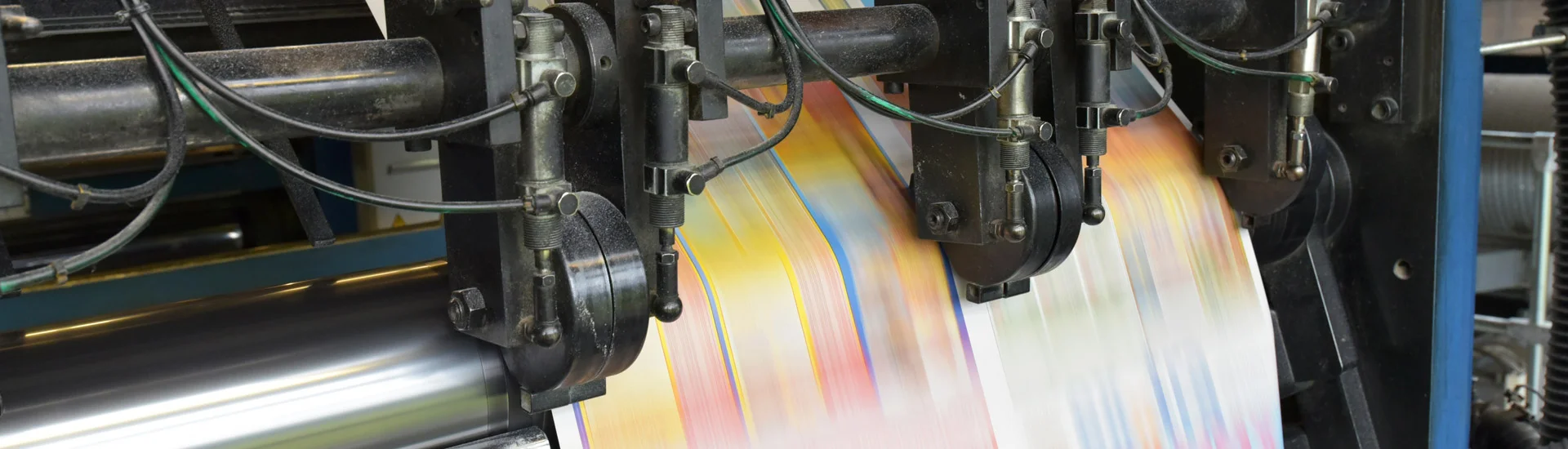
A secure QR isn’t “just a QR.” It’s a copy-proof graphic tuned to your press, ink, and substrate so that any photocopy/scan-reprint attempt breaks the micro-features and fails verification on the first scan. That only works when your print line is calibrated and your facility is certified to the right security SOPs.
Below is the practical, press-friendly playbook for producing Dupeblock Copy-Proof QR at scale.
Quick definitions
- QR code (standard): A 2D barcode that encodes data (usually a URL). Easy to print, easy to copy.
- Secure / Copy-Proof QR (Dupeblock): A standards-readable QR with an embedded copy-detection image (“secure graphic”). It survives normal printing but degrades when copied, letting a smartphone flag duplicates.
Why calibration matters (the technical bit)
The secure graphic relies on very specific dot behavior—tone, gain, edge acuity, noise. Calibration learns your press’s fingerprint and sets safe operating windows so that:
- Micro-features print consistently across runs.
- Verification passes at normal scan distances and lighting.
- Copy attempts lose the critical micro-information.
Without calibration, you risk false fails (too fragile) or weak security (too forgiving).
Why certification matters (the procedural bit)
Certification validates that your equipment and team follow security SOPs and can repeatedly hit the calibrated target.
Typical Dupeblock certification tracks:
- Press capability & QC: Repeatable tone curves, register stability, and performance at target speeds.
- Substrate/ink stack: Approved combinations for contrast, rub/scratch durability, and post-press finishing.
- Security procedures: Controlled artwork workflow, plate/waste destruction, access control, job segregation, retained samples.
- People & training: Named operators, sign-offs, incident logging.
End-to-end production workflow
1. Discovery & press characterization
- Identify process: digital toner/inkjet, flexo, offset, gravure, screen.
- Record substrates, varnish/laminate, and finishing stack.
- Baseline metrics: LPI/DPI, dot gain, register, speed ranges.
2. Calibration pack (Dupeblock)
- Print secure patches + control fields at planned line speeds.
- Send measured sheets/rolls for analysis.
- Dupeblock issues a Device Calibration Profile (DCP): tone curves, density windows, blur/noise tolerances, module size, finishing approvals.
3. Artwork integration
- Dupeblock supplies press-tuned secure QR assets (EPS/PDF/SVG).
- Maintain quiet zone ≥ 4× module.
- Use high-contrast field; avoid textures and metallic inks behind the code.
- Prefer K-only code cells.
4. Make-ready & proof
- Apply DCP tone curves in RIP; lock screening/resolution.
- Pull live sheets at target speed; validate with check app + loupe.
- Record ΔE, optical density, and pass/fail stats.
5. Production & inline QC
- Sampling cadence: every 15–30 minutes per lane.
- Log environment: speed, temp, humidity, ink batch.
- Track consumable wear: anilox, blankets, nozzles, fuser units.
6. Post-press & finishing
- Keep code area matte/low-gloss to minimize glare.
- Avoid emboss/deboss inside code area; maintain flatness.
7. Acceptance & release
- Meet minimum first-scan pass rate per DCP.
- Attach retained samples + QC log.
- Ship with full certificate of conformity (press, substrate, ink, QC results).
Practical print specs & guardrails
- Resolution: ≥ 600 dpi effective in code area.
- Contrast: Black on near-white recommended.
- Module size: Per DCP—never shrink ad-hoc.
- Registration: Use K-only; avoid multi-color builds.
- Coatings: Use matte/low-gloss; avoid orange-peel texture.
Common failure modes (and fixes)
- Glare: Caused by gloss varnish → use spot-matte window.
- Washed micro-features: Ink starvation → correct density.
- Soft edges: Excess impression or worn blankets → reset/replace.
- Noise speckle: Dust/fiber lift → clean path or switch stock.
- Post-press scuffing: Add protective slip sheet or code-up lanes.
Security SOP essentials (for certification)
- File custody: Secure portal; restricted RIP; checksum validation.
- Plate/cylinder control: Unique IDs; locked storage; documented destruction.
- Waste handling: Macerate or cross-cut code-bearing waste; log and witness.
- Access control: Limited press-side access; visitor logs; cameras.
- Traceability: Job traveler with timestamps, QC, signatures, retained samples.
FAQs
Can any press print Dupeblock secure QR?
No. The line must pass calibration and facility certification to ensure secure graphics print within tolerance.
Do we need serialization?
Not for copy-proofing. Serialization is optional for unit-level traceability and recalls.
What about ISO?
ISO barcode metrics help, but Dupeblock adds security-specific thresholds that standard QR tests don’t cover. ISO 9001/27001 support readiness.
Minimum code size?
Defined in your DCP. Never resize without recalibration.
Can we coat/laminate over the code?
Yes—use low-gloss finishes and keep textures smooth.
Bottom line
Secure QR works because it is press-tuned and procedure-controlled. Calibrate the line, certify the shop, and run to spec—your labels will pass effortlessly in the field while copies fail on the first scan.
If you want, I can turn this into a one-page Printer Handbook (PDF) with checklists, QC forms, and a sample job traveler—just say the word.